
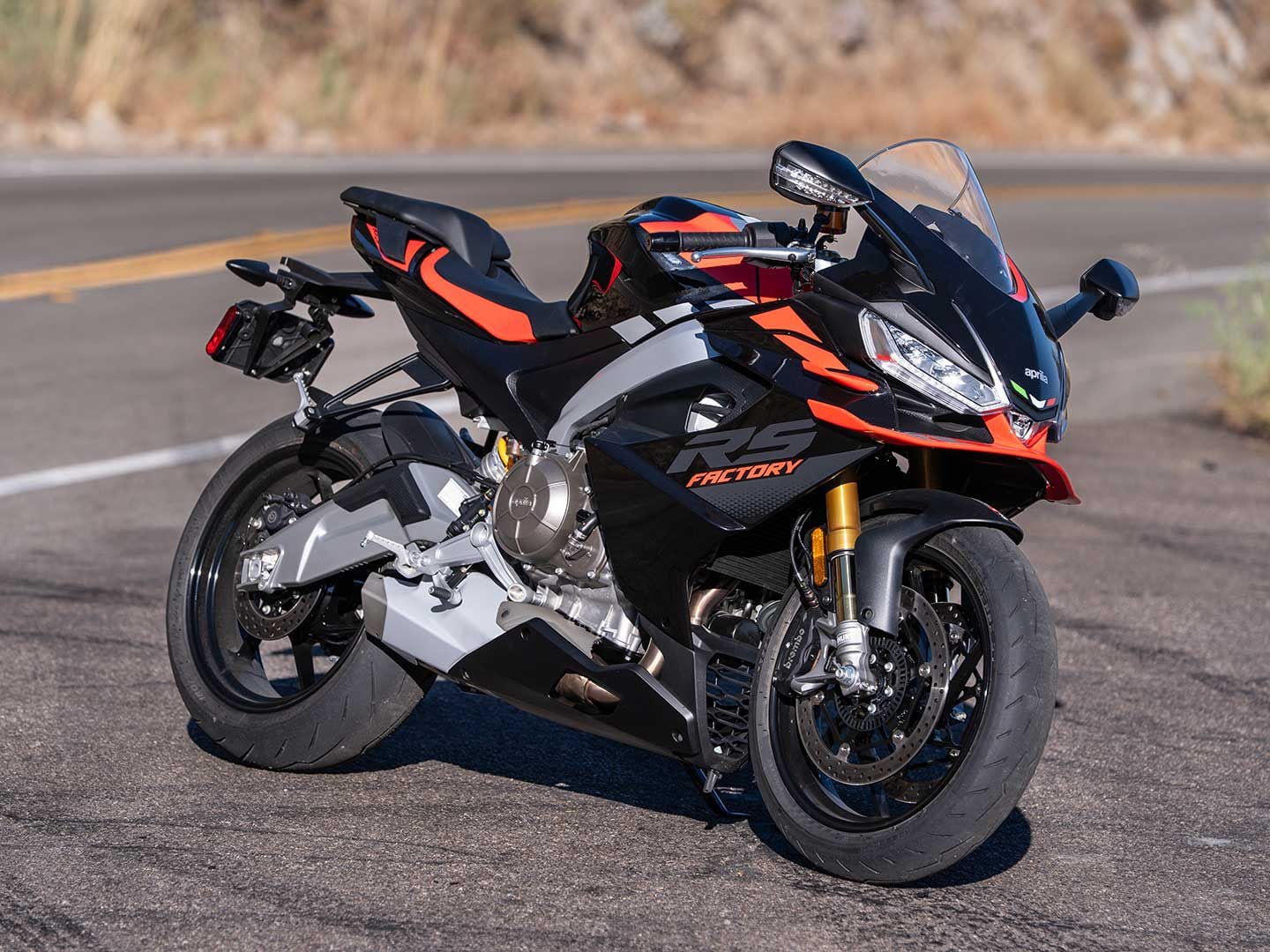
Aprilia RS660 Factory: A Middleweight Sportbike for Commutes and Trackdays
Aprilia’s RS660 Factory is framed as a versatile middleweight, mixing everyday comfort, sharp handling, and refined electronics for both commuting and track use.
Aprilia’s RS660 Factory is presented as a middleweight sportbike aimed at riders who want more than a single-use machine. Based on the available source material, its appeal centers on combining everyday usability with the sharper responses expected from a sporty platform. That makes it especially relevant in a class where many buyers want one motorcycle that can handle the weekday commute, a fast back-road ride, and the occasional trackday without feeling compromised in every setting.
What Defines the RS660 Factory
The key theme is balance. The RS660 Factory is described as blending real-world comfort, sharp handling, and refined electronics into one package. That positions it as a motorcycle intended to feel approachable in daily riding while still delivering enough focus and feedback for more spirited use.
The “Factory” name also carries a clear message within Aprilia’s lineup. It suggests a more premium, more performance-focused interpretation of the RS660 formula rather than a complete departure from it. In practical terms, that means the RS660 Factory is best understood as a machine that builds on the standard middleweight sportbike concept with a greater emphasis on chassis precision, rider support, and higher-spec equipment.
RS660 Factory Positioning in the Middleweight Class
The RS660 Factory sits in a category that has become increasingly important: motorcycles that are sporty enough to be exciting, but not so extreme that they become tiring or inaccessible on normal roads. Middleweight sportbikes often appeal to a wide range of riders, including those stepping up from smaller displacement machines, experienced riders downsizing from larger superbikes, and commuters who still want a bike with real character.
Within that context, the RS660 Factory’s specification and purpose stand out because they are not narrowly focused on peak performance alone. Instead, the bike is framed around usable performance. That usually matters more in the real world than headline numbers, because riders spend far more time managing traffic, uneven pavement, changing weather, and mixed-speed roads than they do chasing lap records.
Built for More Than One Job
Rather than leaning entirely toward track performance or street practicality, the RS660 Factory is highlighted as capable in both environments. The source specifically points to commuting and trackdays, suggesting a bike that can move between weekday transport duties and weekend performance riding without losing its identity.
Comfort: intended to support real-world riding.
Handling: tuned to feel sharp and engaging.
Electronics: described as refined, reinforcing its modern middleweight positioning.
Versatility: suitable for commuting as well as trackday use.
That dual-purpose personality is one of the most important details about the RS660 Factory. A true commuter-friendly sportbike needs manageable ergonomics, predictable low-speed behavior, and a riding position that does not become punishing in city traffic. A true track-capable sportbike, meanwhile, needs stability, control, and enough chassis communication to help the rider push harder with confidence. The RS660 Factory’s value comes from trying to bridge those demands rather than choosing only one.
Closer Look at RS660 Factory Strengths
Everyday Comfort
Comfort on a middleweight sportbike is not about luxury; it is about sustainability. Riders need to be able to spend meaningful time in the saddle without constant wrist pressure, cramped legroom, or excessive fatigue. The RS660 Factory is framed as a machine with enough day-to-day civility to make regular use realistic, which is a significant distinction in a sportbike segment where some models feel optimized primarily for short, intense rides.
For commuting, that matters because comfort directly affects how often the motorcycle is actually used. A bike can be fast and attractive on paper, but if the riding position becomes tiring in traffic or over longer stretches of road, its versatility quickly narrows. The RS660 Factory’s real-world comfort claim is therefore central to its overall appeal, not just a secondary bonus.
Sharp Handling
Handling is one of the strongest points in the RS660 Factory’s description. In this context, sharp handling should be read as a combination of agility, responsiveness, and a connected feel between rider and chassis. Middleweight sportbikes often succeed because they can change direction with less effort than larger machines while still feeling planted enough to inspire confidence.
That balance is useful in more than one environment. In urban use, responsive handling can make the motorcycle feel lighter and easier to place. On twisty roads, it improves enjoyment and control. On track, it becomes even more important because consistency and front-end confidence help riders build pace safely and predictably.
Refined Electronics
The draft’s mention of refined electronics is an important specification point, even when discussed in broad terms. Modern electronics can dramatically shape how accessible and confidence-inspiring a sportbike feels. On a machine like the RS660 Factory, electronics are not just about adding features for marketing value; they are part of what allows the bike to function across different riding conditions and rider skill levels.
For commuting, electronic rider aids can help make the bike feel smoother and less stressful in changing road conditions. For spirited riding or track use, those same systems can provide more control and a stronger sense of precision. This is especially relevant in the middleweight category, where buyers often want advanced technology without jumping to the cost, power, and intensity of a liter-class machine.
Why the Factory Version Matters
The Factory designation matters because many riders are not simply shopping for an engine size or a styling theme; they are shopping for a level of finish and dynamic focus. A factory-spec variant usually signals upgraded hardware or a more polished riding experience aimed at enthusiasts who want more than an entry-level sportbike feel.
On the RS660 platform, that idea fits naturally. The standard concept already emphasizes broad usability, so a Factory version strengthens the premium side of the equation. It suggests a motorcycle for riders who appreciate everyday friendliness but also care about suspension quality, chassis behavior, and a sense of technical sophistication. In other words, the RS660 Factory is not only about being easier to live with than a larger superbike, but also about being more serious and more complete than a basic middleweight commuter.
Commuting Use: What Riders Are Likely to Value
For daily riding, the RS660 Factory’s specification is meaningful because commuting places unique demands on a sportbike. Riders deal with low-speed maneuvering, stop-and-go traffic, inconsistent road surfaces, and the need to remain comfortable over repeated trips. A machine that feels too stiff, too cramped, or too abrupt can become frustrating quickly.
The RS660 Factory’s described mix of comfort and electronics points to a more rounded ownership experience. Riders looking for a premium middleweight may be drawn to the idea of a bike that still feels special during ordinary use. That can include the satisfaction of precise handling at modest speeds, the reassurance of modern rider aids, and the practicality of a sportbike that does not require every ride to be an event.
Trackday Use: What the RS660 Factory Promises
Trackday suitability is another core part of the RS660 Factory’s identity. Not every rider needs maximum horsepower to enjoy a circuit. In fact, many riders benefit more from a motorcycle that is manageable, communicative, and less intimidating at the limit. Middleweight sportbikes are often praised for exactly that reason: they let riders focus on lines, braking markers, and corner speed instead of simply trying to control overwhelming power.
The RS660 Factory’s sharp handling and refined electronics are especially relevant here. A well-sorted chassis can make a bike more confidence-inspiring corner after corner, while supportive electronics can help the rider explore performance in a more controlled way. For trackday riders, that often translates to a better learning experience and more usable performance across a full session.
Who the RS660 Factory Is For
The RS660 Factory appears aimed at riders who want a serious sportbike experience without committing to a machine that feels excessive or narrowly specialized. That can include several types of buyers:
Daily riders who want their commute to feel engaging rather than purely functional.
Weekend sport riders looking for agility, feedback, and a premium feel on real roads.
Trackday enthusiasts who value a manageable chassis and modern electronics over brute-force power.
Experienced riders downsizing from larger superbikes to something lighter and more usable.
Riders moving up who want a technologically advanced middleweight with room to grow into.
This broad target audience is part of what makes the RS660 Factory notable. It is not only trying to be fast or comfortable; it is trying to remain relevant to riders at different stages of ownership and different styles of use.
Why That Matters in the Middleweight Class
In the middleweight segment, versatility can be as important as outright speed. A machine that combines comfort, agility, and usable technology can appeal to riders looking for one motorcycle that covers multiple roles. From the source description, that appears to be the RS660 Factory’s central promise.
That promise is particularly compelling because the middleweight class often represents the sweet spot between performance and practicality. Bikes in this category can still feel fast, premium, and emotionally engaging, but they are often easier to exploit and easier to live with than larger, more extreme alternatives. The RS660 Factory fits that logic well by presenting itself as a motorcycle that does not force a rider to choose between excitement and usability.
Aprilia’s RS660 Factory blends real-world comfort, sharp handling, and refined electronics into a middleweight sportbike that’s fun for commuting and trackdays.
Final Take
The strongest case for the Aprilia RS660 Factory is not that it dominates one narrow category, but that it appears carefully specified for mixed use. Its identity is built around premium middleweight performance that remains approachable and practical enough for ordinary riding. That combination gives the RS660 Factory a clear place in the market: a sportbike for riders who want precision, technology, and everyday usability in the same machine.
For anyone considering a motorcycle that needs to handle both transportation and recreation, that blend is more than a marketing point. It is the defining reason the RS660 Factory stands out.
References & Credits
FAQ
- What makes the Aprilia RS660 Factory different from a typical middleweight sportbike?
The RS660 Factory is presented as a more premium, more performance-focused take on the middleweight sportbike formula. Rather than chasing peak performance alone, it emphasizes usable performance through a blend of comfort, sharp handling, and refined electronics.
- Is the Aprilia RS660 Factory suitable for daily commuting?
Yes, the draft frames it as a sportbike with real-world comfort and everyday usability. That matters for commuting because riders often need manageable ergonomics, predictable low-speed behavior, and less fatigue in traffic.
- Why is the RS660 Factory described as a good option for trackdays?
The draft highlights its sharp handling and refined electronics as key advantages for track use. It is positioned as a manageable, communicative middleweight that can help riders build confidence and enjoy usable performance on circuit.